
How Open Mic Nights Work for Newcomers

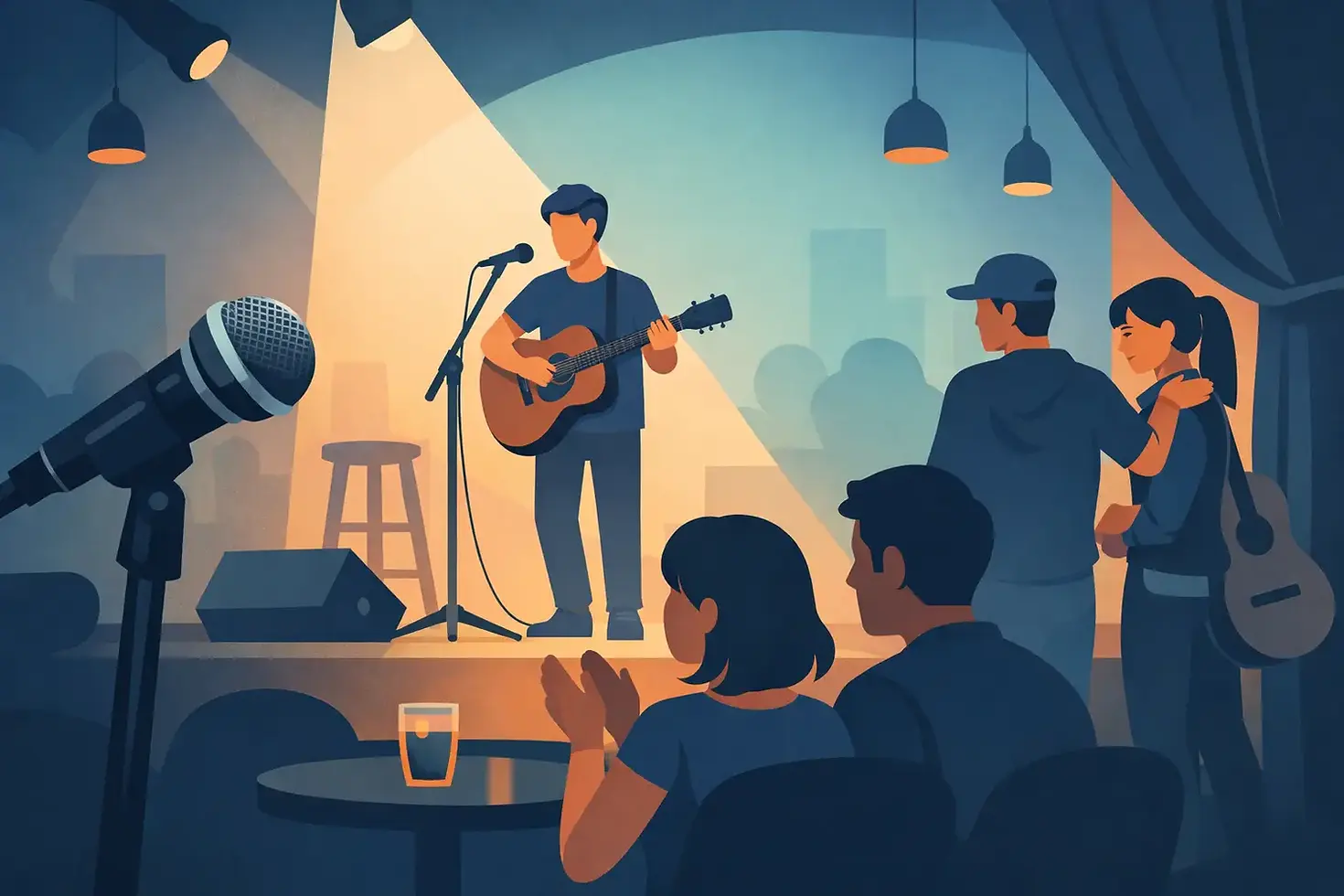
You walk into a bar or comedy club, there’s a small stage, a host with a clipboard, and a room full of people who look half relaxed, half ready for anything. That’s usually the point. If you’ve ever wondered how open mic nights work, the short answer is simple: people sign up for a short set, the host runs the order, and the audience gets a live show that can be wildly funny, surprisingly sharp, and sometimes gloriously chaotic.
But the details matter, especially if you’re deciding whether to watch, perform, or bring friends along for the ride. Open mic nights are one of the easiest ways to try live comedy without a lot of pressure, and they’re also one of the best low-commitment nights out if you want something more social than just sitting in another bar.
How open mic nights work at a basic level
An open mic is a live show where anyone who meets the venue’s rules can sign up to perform. In comedy, that usually means each person gets a short set, often somewhere between three and five minutes. The lineup can include first-timers, experienced comics testing new material, and regulars building toward longer showcase spots.
The host is the person who keeps the night moving. They explain the rules, bring each performer on stage, manage timing, and keep the room warm if a set lands perfectly or falls apart in real time. A good host makes the whole thing feel loose and fun, even though there’s usually more structure than people expect.
Most open mic nights follow the same basic flow. Sign-ups open before the show, performers add their names, the host creates an order, and the sets begin. Some venues use a first-come, first-served list. Others draw names randomly. Some reserve a few spots for regulars or invited acts so the energy stays strong throughout the night.
If you’re there as an audience member, your job is easy. Grab a drink, settle in, and expect variety. One comic might crush with polished jokes. The next might be trying stand-up for the first time in their life. That mix is what makes open mics fun.
What performers usually do before the show
For comics, the night starts before they ever touch the mic. Most arrive early, check in with the host, and make sure they understand the format. That includes set length, when the show starts, whether the mic is clean or uncensored, and how the light system works.
A light system is exactly what it sounds like. When a performer is almost out of time, the host or sound person gives them a visual signal. If they keep going well past their limit, they may get played off, interrupted, or simply not be invited back quickly. Open mics are casual, but timing is not optional.
New performers often assume they need a full routine. They don’t. For a first open mic, three decent minutes is enough. What matters more is having a clear start, a few jokes you can actually say out loud, and the sense to stop when your time is up.
There’s also a practical side that beginners rarely think about. You may need to put your name down on paper. You may need to order something if the venue is a bar. You may need to stay for the full show if that’s part of the house rules. Open mics are community events as much as they are performances, so venues tend to reward people who respect the room.
What the audience should expect
If you’ve never been to one, it helps to set your expectations correctly. An open mic is not the same as a polished Saturday night headliner show. You’re watching material in progress, people finding their voice, and sometimes a comic discovering halfway through a joke that the joke does not work at all.
That sounds rough, but it’s often part of the fun. Open mics can feel more intimate and more unpredictable than standard shows. You’re seeing live entertainment without the glossy finish, which means the highs feel earned and the weird moments become their own kind of story.
For audience members, the best approach is to be engaged and generous. Laugh when something is funny. Stay off your phone. Don’t start side conversations during someone’s set. And unless the room clearly has a heavy crowd-work vibe, don’t treat the show like a debate. You’ll have a better night, and so will everyone else.
If you’re in a city with a strong nightlife scene, an open mic can be a smart choice because it’s low friction. You don’t need to know the performers. You don’t need deep comedy knowledge. You just show up ready for a live room and a few surprises.
How open mic nights work for first-time comics
The biggest misconception is that open mics are only for naturally fearless people. They’re not. They exist for practice. Plenty of comics who now look completely at home onstage started by speaking too fast, forgetting punchlines, and gripping the mic stand like it owed them money.
For a first timer, the process is usually straightforward. You sign up, wait for your name, walk onstage, introduce yourself or start with your first joke, do your set, and leave when your time is done. The host handles the transition. You do not need to invent stage magic. You need to say your material clearly and keep going even if the first laugh comes later than you hoped.
It also helps to know what not to do. Don’t bring ten minutes when the room allows four. Don’t apologize before you start. Don’t explain why a joke is supposed to be funny. And don’t assume silence means disaster. At open mics, a decent set can have uneven laughs simply because the room is still warming up or the audience has heard thirty people already.
The trade-off is obvious. Open mics are accessible, but that accessibility means quality varies a lot. If you want guaranteed killers all night, go to a curated showcase. If you want to see how comedy is actually built, open mics are where that happens.
The house rules matter more than people think
Every venue has its own version of the same basic goal: keep the night moving and keep the room usable for everyone. That’s why rules can feel strict even in a casual setting.
Some places allow walk-in sign-ups. Some require advance booking because spots are limited. Some are clean shows. Some are late-night anything-goes rooms. Some welcome all styles, while others lean heavily toward comedy, music, or poetry. Before you go, it’s worth checking the format so you don’t walk into the wrong expectation.
Audience rules matter too. Many rooms expect people to support the show rather than talk over it. If there’s table service, order with minimal disruption. If the venue is small, even one loud conversation can throw off the room. Comedy depends on attention. When the audience gives it, the night gets better fast.
For performers, the unspoken rule is simple: be easy to work with. Respect the host, know your time, and support other acts. Open mic scenes are smaller than they look, and people remember who made the night smoother.
Why open mics are so popular
Open mics work because they give everyone something. New comics get stage time. Experienced comics get a lab for fresh bits. Venues get a lively event that brings in a social crowd. Audiences get a cheaper, looser, more unpredictable show than a formal ticketed headline set.
They also create a different kind of night out. There’s a built-in conversation starter because you’re all reacting to the same live moment. That makes open mics especially good for travelers, expats, and anyone looking for something fun to do without needing a full plan.
In a city like Osaka, where nightlife can be packed with options but not always easy to navigate in English, that kind of event has real appeal. A good English-language comedy room gives people a social place to land, whether they live here, just arrived, or are only in town for a few nights. That’s part of why venues like Osaka Comedy Club can draw both curious first-timers and regulars who come back for the energy.
Should you go to one tonight?
If you want a perfectly polished show, maybe not. If you want a live room with personality, quick sets, real laughs, and the chance to see someone either kill or beautifully implode in under five minutes, yes, absolutely.
That’s really how open mic nights work. They’re structured enough to run, loose enough to feel alive, and social enough to turn a random evening into a story you’ll keep telling. Show up a little early, know what kind of room you’re in, and let the night be what it is. Sometimes that’s a future star testing new jokes. Sometimes it’s a first-timer surviving their first set. Either way, you get something real, and that’s a pretty good reason to go out.


Comments